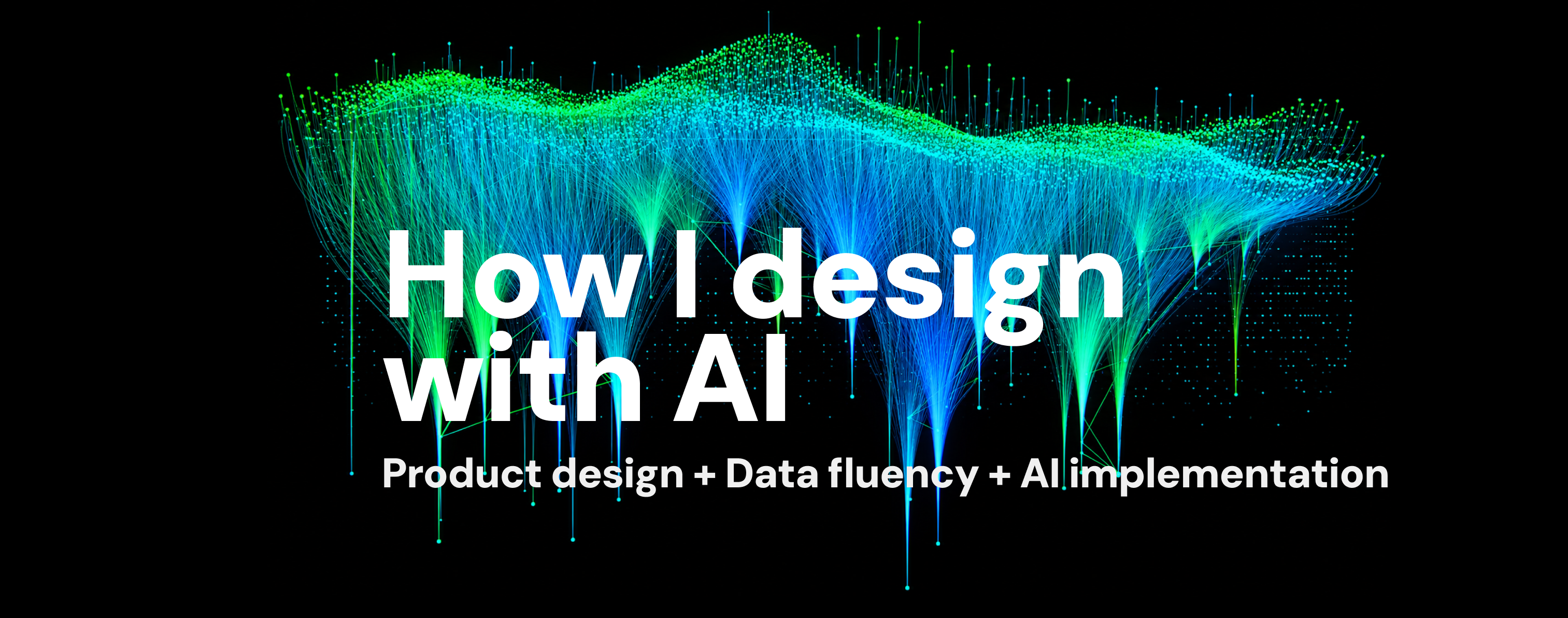
— AI-assisted design
— Vibe Code
— Validation
— Design process
— Responsible AI
Frame the problem
- Speak to or observe users. Record what frustrates them and the outcome they need.
- Write a one-page brief: users, needs, experience, constraints.
- Focus on the outcome, not the feature they ask for.
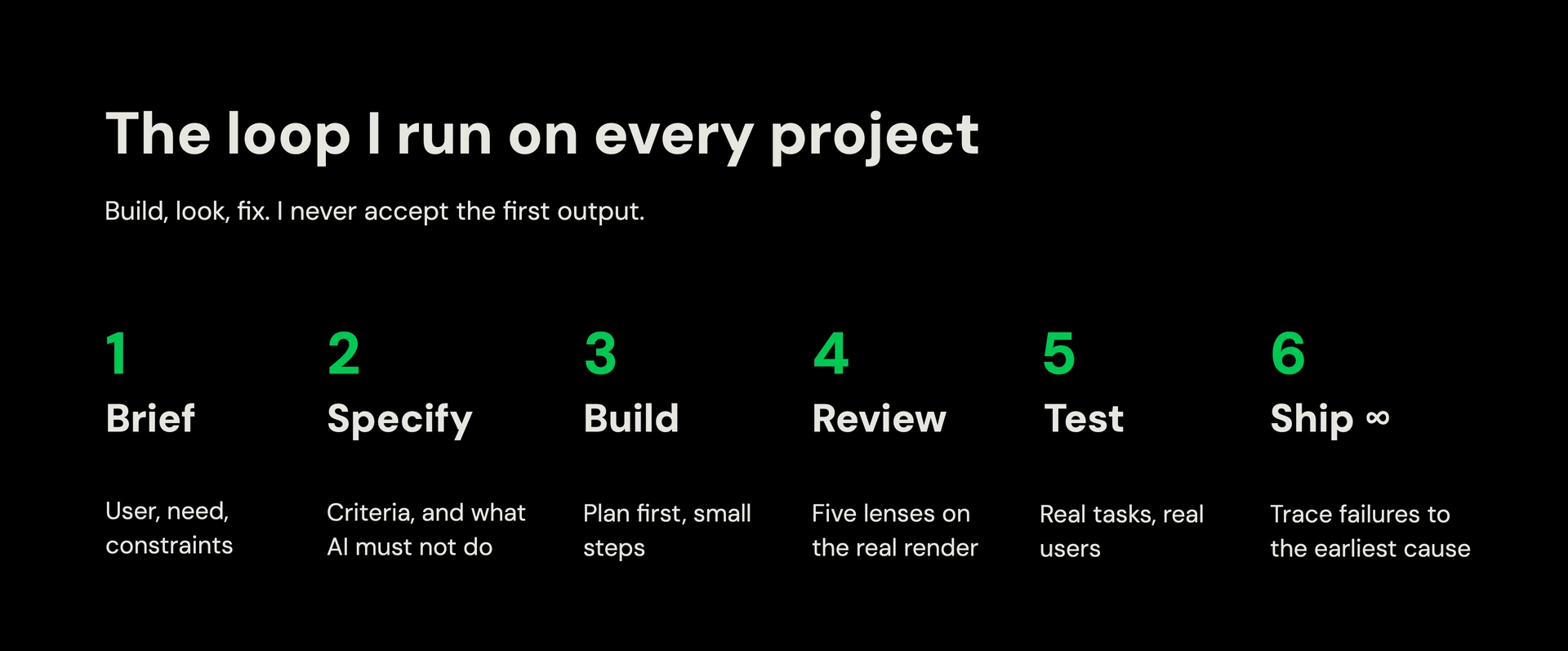
Specify before prompting
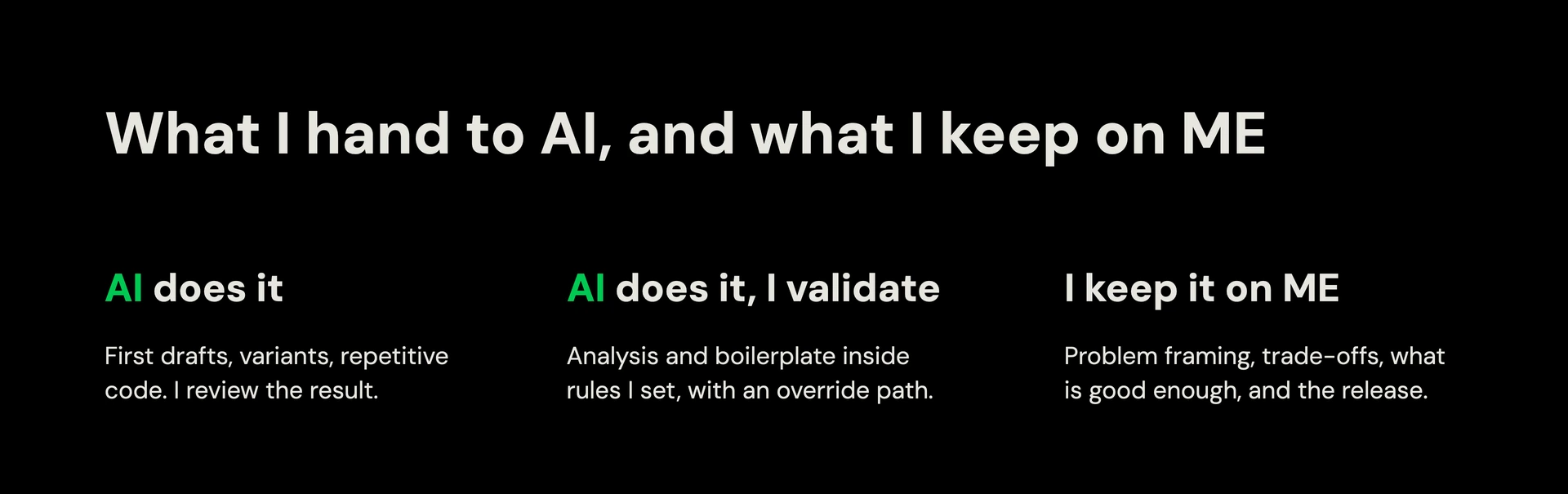
- Decide what AI automates, what it augments, and where I keep control.
- Turn needs into measurable requirements: "simple" becomes "three steps, no account".
- Write pass/fail criteria (given, when, then) and edge cases before anything is built.
Prompt, build, review
- Give AI the Brief, Constraints, Sample data and Tests, and what it must not do.
- Build one tested part at a time, then review it through five lenses.
- I ask: "Show me the source that confirms this." Prototypes run on real data and are checked for security.
- Framework: Five Lenses of Discernment, adapted from Claude Academy
Test on Users
- A realistic task, no coaching. I watch where people hesitate or lose confidence.
- Passing the tests is not the same as a satisfied user.
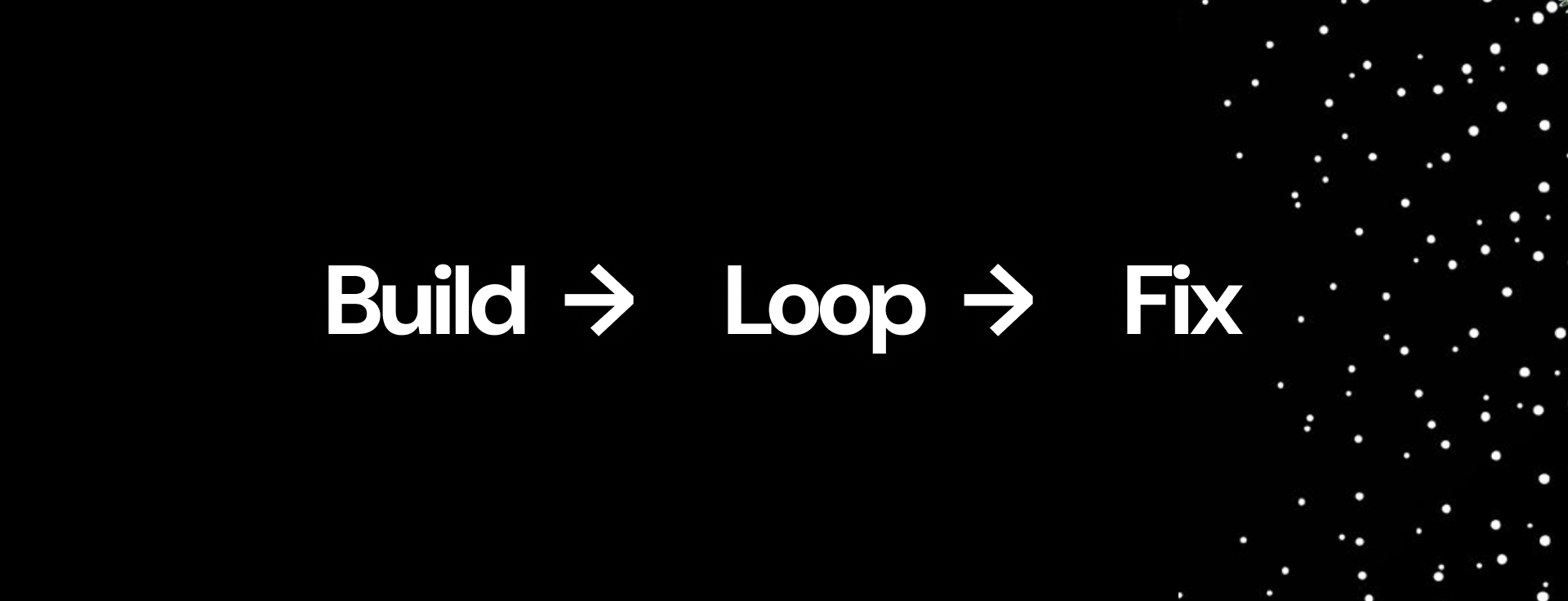
- I trace each failure back: User, Requirement, Spec, Prompt, Code. The earliest weak link gets fixed.
Ship responsibly
- Before release: limits are known, edge cases pass, and privacy, safety and access are reviewed.
- A person, not the AI, is accountable for the result.
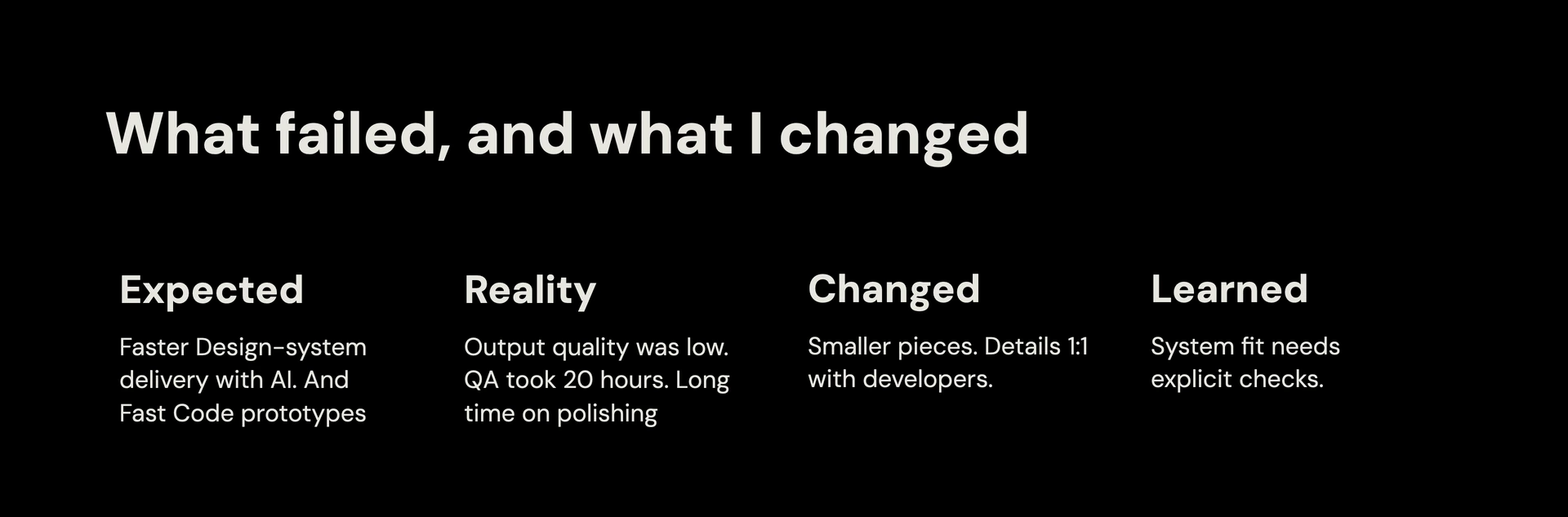
- Where it failed: design-system migration. QA took 160 hours. Smaller pieces and 1:1 sessions with developers fixed it.
- 30+ products: scope of the AI assistant I designed at Blue Yonder.
- 50% fewer clicks (Blue Yonder data modelling) and 34% faster tasks (Jabil): design results from before AI.
- 24% less service time at Jabil.
- me and one developer building what earlier took 4 teams and 8-10 people. We merged and rewrite 2 projects in one.
- AI-workflow metrics from autumn 2026: jumped to first review after 2 days, QA hours per component took a few hours (rather that 2 sprints), iterations 2 days.